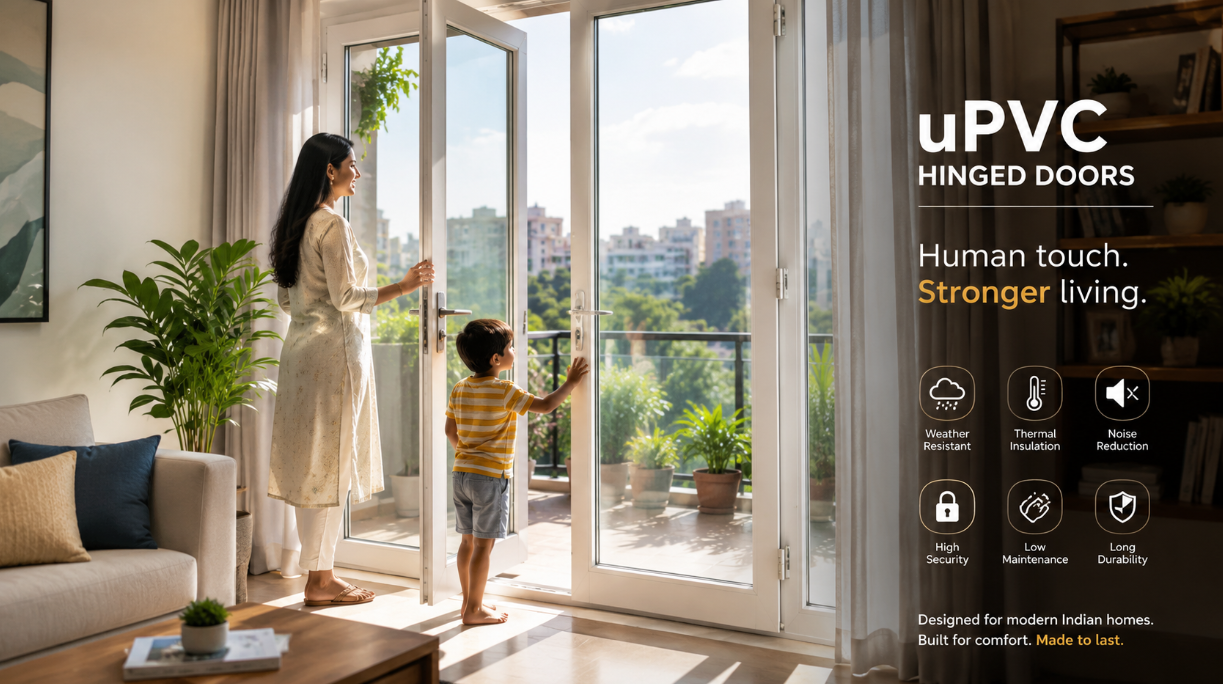
UPVC Hinged Doors: The Smart Choice for Home Upgrades in Gurugram
Upgrading doors is one of the fastest ways to refresh your home’s look, improve security, and make living spaces more comfortable. For homeowners in Gurugram, UPVC hinged doors combine durability, low maintenance, and thermal efficiency—features that suit both modern apartments and independent houses. This post explains what UPVC hinged doors are, common problems homeowners face, how to choose the right door, and why selecting a quality manufacturer matters.
What is a UPVC hinged door?
UPVC (unplasticized polyvinyl chloride) is a rigid, weather-resistant material widely used for doors and windows.
A hinged door is one that swings open on side-mounted hinges—available as single, double, or French doors for patios, balconies, kitchens, bathrooms, and rooms.
UPVC hinged doors combine the material benefits of UPVC with a traditional opening mechanism that’s simple, reliable, and widely preferred for interiors and exteriors.
Why UPVC hinged doors work well for Gurugram homes
Weather resilience: UPVC resists moisture and temperature extremes common in Gurugram, preventing warping or rotting that affects wooden doors.
Thermal insulation: Quality UPVC doors with multi-chamber profiles and sealed gaskets reduce heat transfer, improving indoor comfort during hot summers and cooler winters.
Low maintenance: Unlike wood, UPVC doesn’t need painting or regular varnishing. Cleaning usually requires only soapy water.
Noise reduction: Multi-chamber frames and proper glazing reduce street noise—useful for busy Gurugram neighborhoods.
Security: Reinforced profiles and multi-point locking systems enhance safety compared with standard single-point locks.
Cost-effective: UPVC offers a strong price-to-performance ratio and longer life-cycle value.
Common symptoms and problems homeowners experience (and how UPVC hinged doors solve them)
Drafts and air leakage: Symptoms include cold or hot air entering along door edges, fluctuating room temperatures, or higher energy bills. Well-sealed UPVC hinged doors with quality gaskets fix these problems.
Sticking or swollen frames: Wooden frames expand in humidity, causing sticking or gaps. UPVC frames remain stable and keep smooth operation year-round.
Difficulty operating hinges or locks: Symptoms are squeaking, stiff opening, or jammed locks. UPVC doors with corrosion-resistant hardware and adjustable hinges maintain smooth function and can be adjusted rather than replaced.
Condensation and water ingress: Visible moisture on or around the door, or water seeping in during monsoon rains, often comes from poor seals. Properly installed UPVC doors with good thresholds and drip channels prevent water ingress.
Security concerns: Weak single-point locks or aging frames can’t withstand forced entry. UPVC doors fitted with multi-point locks and reinforced steel inserts increase security.
Fading or peeling paint: If you’re tired of repainting doors, UPVC’s color-stable finishes keep a fresh look without regular recoating.
How to choose the right UPVC hinged door (practical checklist)
Profile quality: Look for multi-chamber UPVC profiles with steel reinforcement for strength. Profiles should be from an established brand and comply with local standards.
Seal and gasket system: Ensure continuous EPDM or similar gaskets that seal along the frame and threshold.
Glazing options: For better insulation and sound reduction, choose double-glazed or triple-glazed panels with gas-filled cavities and low-E coatings if budget allows.
Hardware and locks: Prefer multi-point locking systems, stainless steel hinges, and anti-lift pins for security. Check warranty and ISO certification for the hardware.
Threshold and sill design: For external doors, a thermally broken sill or low-threshold option helps with insulation and accessibility.
Finish and colour: UPVC is available in white and woodgrain finishes. Choose powder-coated or foil finishes that resist UV fading.
Professional installation: Even the best door performs poorly if incorrectly installed. Ask about site measurement, removal of old frames, proper anchoring, and sealing.
Local considerations for Gurugram
Monsoon-proofing: Ensure raised thresholds and effective sealing to prevent seepage during heavy rains.
Heat management: Choose profiles with better thermal performance and glazed units that reduce solar heat gain for summer comfort.
Noise control: If you live near busy roads or metro lines, prioritize double glazing and tighter seals.
Local regulations and society approvals: Many residential societies have rules about external appearance—confirm permitted finishes and door styles before installation.
Maintenance tips (simple and homeowner-friendly)
Clean frames with mild soap and water every few months.
Lubricate hinges and locking points once or twice a year with a light machine oil or graphite (avoid heavy grease inside locks).
Check and replace worn gaskets to maintain seals.
Adjust hinges or strike plates if doors start to stick; most hinges are adjustable without dismantling the frame.
Inspect drainage slots and keep them clear to avoid water accumulation.